
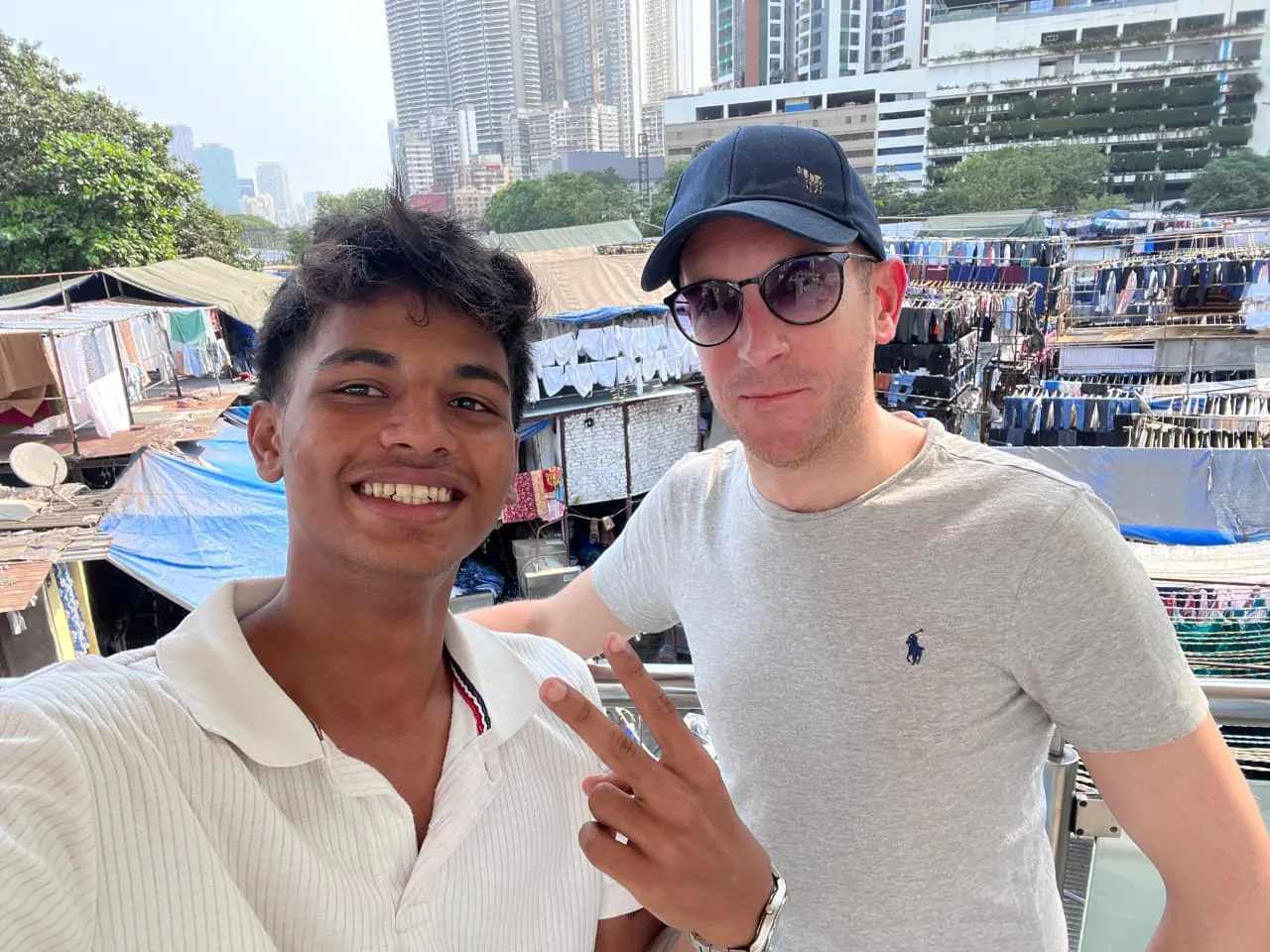
Mahalaxmi Dhobi Ghat is an open-air laundry in central Mumbai where hundreds of washers, known as dhobis, wash, dry and iron clothes by hand for hotels, hospitals and homes. It is often described as the world’s largest open-air laundry, and it is best seen from the railway overbridge near Mahalaxmi station.
What you are looking at
Rows of concrete washing pens, each with a flat stone, line the ground below. Washers stand knee-deep in water, beating clothes against the stone. Lines of coloured sheets, shirts and uniforms dry in the sun. The area is a working part of the city, and has been for well over a century.
How it works
- Collection. Clothes arrive from hotels, hospitals and households, and are sorted by owner.
- Marking. Each bundle gets a coded mark in indelible ink so it can be tracked back to its owner.
- Washing. Clothes are soaked, scrubbed and beaten on the stone in the pens.
- Drying. They are hung on long lines across the open ground.
- Ironing. Heavy irons, traditionally heated with coals, press and finish them.
- Return. Bundles are delivered back, usually within a day or two.
The people
The dhobis are families, and many have done this work for generations. Living quarters sit alongside the washing pens. It is hard, skilled, physical work, in a trade now facing washing machines and rising costs. When you visit, you are a guest at somebody’s workplace.
How to visit respectfully
- View from the bridge. Do not walk into the washing area without a guide.
- Ask before you photograph individuals.
- Do not throw money or sweets down to children.
- Be patient on the bridge: it is narrow and busy.
When to go
Mornings are best, when washing is in full swing and the light is good. Your visit takes 20 to 30 minutes. The ghat is not a formal attraction, so there are no opening hours; it works every day.
See it on a tour
Dhobi Ghat is a stop on our full day city tour and can be added to the half day tour. For a closer look at working Mumbai, try our respectful Dharavi tour.
A short history
The laundry grew up in the late nineteenth century, when Mumbai’s population, hospitals and hotels needed large-scale, affordable washing. Over time the concrete pens, drying lines and sheds took the shape you see now. It remains a family trade, passed through generations.
Dhobi Ghat in popular culture
The ghat is one of Mumbai’s best-known images. It features in photographs, documentaries and films, including the 2010 Hindi film Dhobi Ghat. That fame brings visitors, and with them a responsibility to behave well.
Photography: do and do not
- Do take wide shots from the bridge.
- Do ask before photographing a person, and accept a no.
- Do not use a drone.
- Do not climb down to the pens without a guide and permission.
What else is near?
The ghat is close to Mahalaxmi station and the Haji Ali Dargah, and is easy to pair with a hilltop viewpoint and Marine Drive on a half-day outing.
Private tours to match
Send an enquiry and we will reply with a plan and a price. Nothing is charged on this website.